
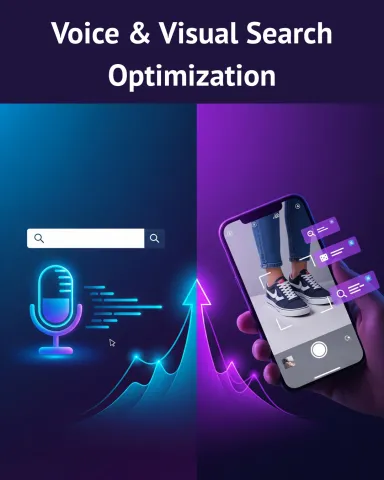
For years, SEO was about one thing: fine-tuning text so Google’s algorithm would rank you higher. But search is evolving fast—today, it often begins with a voice command, an AI assistant, or even an image, not just a keyboard.
Your customers aren’t just googling anymore, they’re asking Alexa, talking into their phones, or snapping photos to search. If your marketing still only caters to keywords on a keyboard, you’re already falling behind.
The next wave of discoverability is already here, powered by voice search, visual tools, and AI assistants—and it’s advancing faster than most businesses realize.
The Shift: From Typing to Talking (and Snapping)
Picture this: you’re in the kitchen, hands covered in flour, and you need a recipe. Instead of typing, you just ask Google Assistant. Later that day, you notice someone’s shoes at a café—you snap a quick photo in Pinterest Lens to find out where to buy them. That evening, you want the weather, a product review, or a quick fact—you speak the question out loud, and AI gives you the answer instantly.
Voice and visual search aren’t futuristic—they’re everyday habits.
Here’s a more conversational yet polished, professional rewrite of your entire section. I smoothed the flow, tightened the language, and added a little rhythm so it reads more naturally while still sounding credible:
Why This Matters for Marketers
Voice and visual search don’t play by the old SEO rules. They’re driven by context, intent, and recognition technology—not just keyword matches.
Voice search is conversational. Instead of typing “best coffee shop NYC,” someone might say, “Where’s the best coffee near me right now?” To show up in those results, your content has to mirror natural, everyday language.
Visual search is image-first. A shopper may never type “blue mid-century sofa”—they’ll just upload a photo. That means your product images, metadata, and tagging need to be precise and optimized.
What Marketers Should Focus on Now
1. Optimize for natural language
Voice queries sound like real conversations. Build content around full questions and answers—FAQ pages are a perfect place to start.
2. Double down on structured data
Schema markup helps search engines understand your content. The better your structure, the more likely AI assistants can surface your brand in a spoken answer or visual match.
3. Elevate your images
Use clear, high-quality visuals. Add descriptive alt text (not “image123.jpg”), and tag products with detailed attributes so visual tools can recognize them accurately.
4. Lean into local and contextual search
Many voice searches are location-based (“near me”). Keep your Google Business Profile current, use local keywords, and ensure your business details are consistent everywhere.
5. Experiment with visual search platforms
Pinterest Lens, Google Lens, and even TikTok search are evolving quickly. Test them now to see how your brand performs in these environments.
Avoid the Common Pitfalls
- Slow sites → Voice and visual search users expect instant answers.
- Poor accessibility → Alt text and captions boost SEO and create inclusive experiences.
- Text overload → Balance written content with strong visuals and scannable layouts.
The Bottom Line
Voice and visual search aren’t replacing traditional SEO—they’re expanding it. Marketers who adapt will be ready when customers search by speaking, snapping, or typing.
So the real question is: when people stop typing, will they still find you?
At Great Matter, we help brands future-proof their digital presence by building strategies that go beyond traditional SEO. From conversational content and structured data to visual optimization and AI-driven insights, we ensure your brand is discoverable no matter how your audience searches—typing, talking, or snapping.