
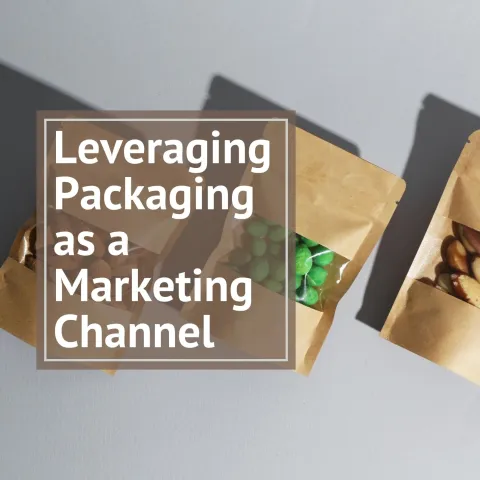
Why Your CPG Brand's Packaging Is Your Most Underrated Marketing Channel
In a world where digital ads are skipped, influencer posts are scrolled past, and attention is the scarcest resource on earth, your packaging sits quietly on a shelf and waits. It doesn't beg. It doesn't auto-play. It just exists, doing the most important sales job your brand will ever ask of anything: converting a stranger into a buyer in under three seconds.
And yet, most food and beverage brands treat packaging as an afterthought, something finalized after the "real" marketing work is done. That's a mistake that's costing them more than they realize.
The Shelf Is a Media Channel
Think about the last time you walked down a grocery aisle you weren't familiar with. You weren't reading every label. You were scanning picking up on color, shape, typography, and texture before your conscious brain even got involved. That's not shopper laziness. That's neuroscience.
Packaging is the only marketing touchpoint that reaches every single person who considers buying your product. It's not subject to targeting algorithms, ad blockers, or platform changes. It shows up, every time, exactly where the purchase decision is being made. That makes it more valuable than most brands give it credit for.
The smartest CPG brands understand this. They're not designing packaging to contain product they're designing packaging to communicate brand. There's a significant difference.
What Shelf-Winning Packaging Actually Does
Great packaging works on multiple levels simultaneously. On the surface, it signals category (what is this?), quality (is it worth my money?), and values (does this brand reflect who I am?). Beneath the surface, it tells a story one that earns emotional connection before the product is even tasted.
Consider how brands like Oatly disrupted the plant-based milk category not just through product, but through packaging that felt categorically different from everything around it. The conversational, self-aware copy. The unconventional use of white space. The sense that there was a real, witty, opinionated human behind the brand. The packaging wasn't just holding oat milk it was performing a brand personality at retail scale.
That's the power available to every food and beverage brand willing to take packaging seriously as a creative medium.
Sustainability Signals Are Now a Shelf-Level Conversation
Modern consumers particularly Millennials and Gen Z are making purchasing decisions at the intersection of desire and values. They want the product, but they also want to feel good about how they got it. Packaging has become the primary place where that values transaction happens.
This doesn't mean slapping a recycling symbol on the back and calling it a day. Today's conscious consumer is more sophisticated than that. They notice when "eco-friendly" language feels performative versus substantive. They're drawn to brands that communicate sustainability as an integrated design choice not a sticker applied after the fact.
Brands that lead with honest material choices, minimal waste design, and clear end-of-life instructions are building trust at the exact moment it matters most: right before the purchase.
Typography Is Brand Voice Made Visible
Of all the packaging decisions brands agonize over color, imagery, finish typography might be the most powerful and the most underestimated. The typeface you choose doesn't just affect readability. It communicates personality, heritage, energy, and category positioning before a single word is read.
A serif with classical proportions says something different than a bold grotesque. A hand-lettered logotype signals artisanal craft in a way a clean sans-serif never could. These are not small details. They are the visual grammar of your brand, and they either reinforce your positioning or quietly undermine it.
For food and beverage brands especially where tactile qualities like warmth, freshness, and authenticity are everything typographic choices carry enormous weight.
Stop Designing for Awards. Design for Aisles.
The most common packaging mistake brands make is designing to impress within the category rather than to stand out from it. When everyone in your segment is using the same earth-tone palette and the same artisan script typefaces, the brave move is to go somewhere else entirely.
The brands winning at retail today are the ones asking different questions. Not "what does a premium product look like in our category?" but "what would make someone stop walking?" Not "how do we look credible?" but "how do we create a moment of genuine delight?"
Your packaging is a media channel, a brand ambassador, and a silent salesperson all in one. Treat it accordingly, and watch it become the most cost-effective marketing investment you've ever made.
The Authenticity Paradox: How Food Brands Can Go Viral Without Losing Their Soul
There's a pressure cooker moment happening in food and beverage marketing right now. On one side: the very real, very urgent need to show up in social feeds, chase algorithmic trends, and participate in the content formats driving discovery in 2024. On the other side: the equally real risk that chasing virality erodes the brand authenticity that made you worth caring about in the first place.
This is the authenticity paradox, and navigating it is one of the central challenges facing food and beverage marketers today.
Why Authenticity Became the Most Important Word in Food Marketing
Food has always been personal. It connects to memory, identity, culture, and comfort in ways that most product categories simply can't compete with. When a food brand feels real, when its origin story checks out, when the founder actually cares, when the product actually does what it says, there's a depth of consumer loyalty available that no amount of paid media can manufacture.
The problem is that "authenticity" has become a marketing buzzword, which means it's now everywhere and means almost nothing. Every emerging food brand claims to be "real," "honest," or "made with love." The words have been drained of their power precisely because they've been deployed without substance.
True authenticity isn't a tone of voice. It's a set of choices, about what you make, how you talk about it, and what you're willing to say no to, that builds a consistent, credible brand over time.
The UGC Trap
User-generated content has been one of the most effective tools in food marketing for the last decade. When real people share real reactions to your product, unscripted, unpolished, unfiltered, it carries a credibility that produced content can't match. Brands that understood this early built massive communities and drove serious revenue on the back of authentic peer-to-peer recommendation.
But here's what's happened since: brands started manufacturing UGC. Seeding products to micro-influencers with specific talking points. Asking customers to recreate "organic" moments on camera. Paying creators to simulate spontaneous discovery. The format was preserved; the authenticity was hollowed out.
Consumers noticed. And the trust erosion that followed has made genuinely authentic UGC more valuable than ever, while making performed authenticity a reputational liability.
Lo-Fi Video: Signal or Noise?
The rise of lo-fi video content, shaky camera, ambient sound, no color grading, visible mess, was initially a genuine rebellion against overproduced brand content. It felt like an invitation into real life, and for the food brands that used it early and used it honestly, it worked extraordinarily well.
Now, lo-fi is a production style choice. Brands hire videographers to shoot content that looks accidental. They rehearse spontaneity. The result is a kind of uncanny valley content that has the visual grammar of authenticity without the substance of it. Savvy consumers find it more off-putting than a well-produced brand spot would be, because the deception is visible.
The lesson isn't that lo-fi is bad. It's that format alone doesn't create authenticity. What matters is whether the content is telling a true story about the product, the brand, the people behind it in a way that would hold up under scrutiny.
Founder-Led Content: High Risk, High Reward
One of the most powerful tools available to food and beverage brands right now is also one of the most underutilized: the founder's voice. When a real person with genuine conviction, real knowledge about the product, and the willingness to be imperfect on camera shows up consistently to talk about their brand, it creates a kind of trust that no agency-produced content can replicate.
Think of the brands where a founder's face and voice have become inseparable from the brand itself. The credibility they carry is earned, not manufactured. But it only works if the founder is actually showing up authentically sharing real opinions, acknowledging real challenges, being human rather than performing "humanness."
The risk is significant. A founder who comes across as performative, inauthentic, or out of touch can do serious damage to a brand. But for the founders willing to be genuinely vulnerable and genuinely themselves, the upside is a level of connection with consumers that no other content type can deliver.
Keeping Your Soul While Playing the Game
The food and beverage brands that will win the next decade are the ones that figure out how to participate in contemporary content culture without being consumed by it. That means having a clear enough sense of brand identity that you can evaluate any trend by a simple question: does this serve our story, or does it distort it?
It means being willing to sit out trends that don't fit even when the FOMO is real. It means investing in content that might not go viral but builds genuine equity over time. And it means treating authenticity not as a marketing strategy but as a daily operational commitment: making the product you say you make, in the way you say you make it, for the reasons you say you care about.
That's the only kind of authenticity that survives scrutiny. And in the long run, it's the only kind that builds a brand worth having.